Top 5 Localization Mistakes FinTech Apps Make and How to Avoid Them
Expanding internationally opens doors to new customers, increased revenue, and stronger brand recognition. However, reaching a global audience comes with challenges, especially when it comes to localization. Apart from translating texts, localization also involves adapting your app’s content, design, functionality, and regulatory compliance to fit the cultural and linguistic expectations of the target market.
Even the most innovative FinTech apps can face setbacks if localization is handled incorrectly.
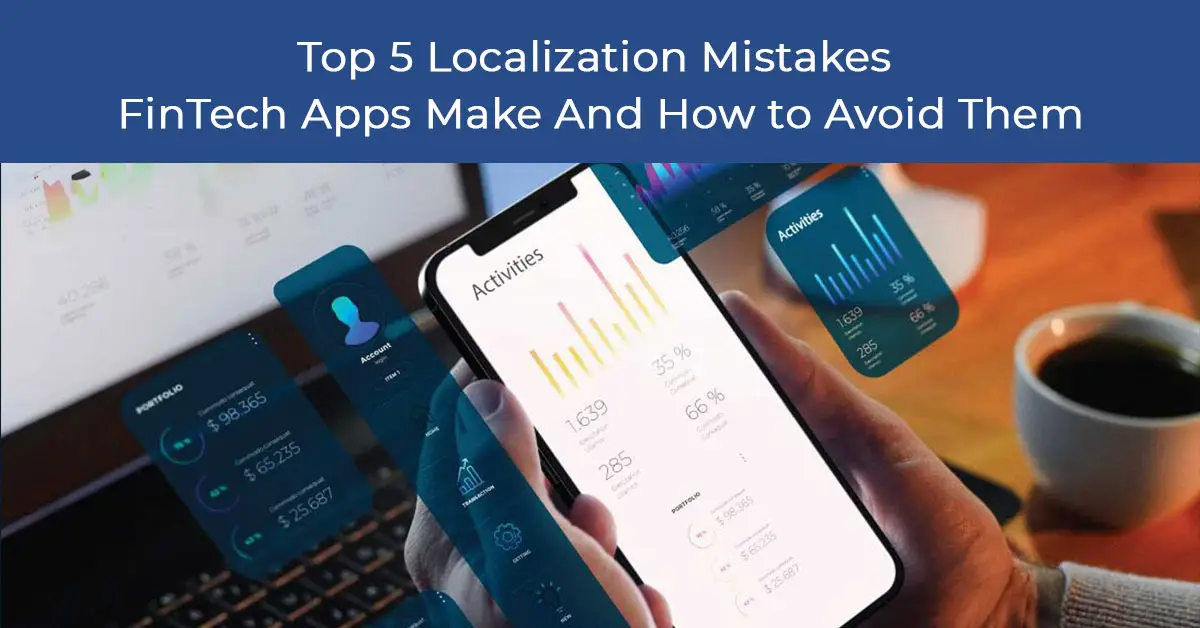
Below, we explore the top five localization mistakes FinTech apps often make and how to avoid them by using professional localization services
Ignoring Regulatory Requirements
How to Avoid This
- Partner with certified translation services to ensure legal and financial documents are accurate and comply with local regulations.
- Localise the text and also financial terminology, currencies, interest rates, and numerical formats (decimals and thousand separators).
- Stay updated on local financial and data privacy regulations to ensure your app remains compliant as laws change.
Overlooking Cultural Context
How to Avoid This
- Engage local experts or native speakers to review content and suggest cultural adaptations.
- Use professional localization services.
- Conduct A/B testing with local users to ensure messaging connects as intended.
Poor UI and UX Adaptation
How to Avoid This
- Conduct usability testing with local users before launching.
- Adjust layouts, fonts, and input fields to meet regional norms.
- Include multilingual support for in-app help sections, chatbots, and notifications.
Literal Translation Instead of Meaning-Based Translation
How to Avoid This
- Use certified translation services that prioritize meaning and context along with vocabulary.
- Ensure translators are familiar with financial terminology and industry standards in the target language.
- Collect feedback from native speakers and beta testers to refine phrasing for clarity and relevance.
Neglecting Continuous Updates
How to Avoid This
- Integrate localization services into your product release workflow so every update is translated and localized promptly.
- Maintain a centralized translation memory to ensure consistency across all content.
- Regularly audit localized content to verify accuracy, relevance, and compliance.
Ready to take your FinTech app global with confidence?
Partner with Language Services Bureau (LSB) for expert translation and localization solutions. From precise legal translations to culturally adapted content, we help your app communicate clearly, accurately, and effectively, no matter where your users are.
Contact us today to get started!
Understanding Sworn Translations
Unlike general translations, a sworn translation is a legal requirement for many documents that need to be recognized officially by government authorities, courts, and regulatory agencies. A sworn translator (tradutor juramentado) is authorized by the government to provide translations that carry legal validity.
These translations are not optional. In Brazil, foreign documents such as contracts, patents, transcripts, or company bylaws need a sworn Portuguese translation to be legally accepted. For law firms, this makes Brazilian Portuguese translation services a critical part of their practice. Without certified translations, even the most well-prepared legal documents may be rejected or considered invalid.
Why Accuracy Matters in Legal Translation
Legal language is complex, precise, and often rooted in cultural and jurisdictional context. A small mistranslation can alter the meaning of an entire clause, leaving room for disputes or even rendering a contract unenforceable. Consider the following risks:
Certified Portuguese sworn translators ensure that documents are not only translated but also carry official recognition, reducing the margin of error and safeguarding legal processes.
The Role of Certified Translation in Cross-Border Transactions
- Mergers and Acquisitions (M&A): Foreign companies entering Brazil need their due diligence reports, agreements, and shareholder documents sworn-translated into Brazilian Portuguese.
- Intellectual Property (IP): Patent filings and copyright agreements must be translated to protect rights under Brazilian law.
- Litigation and Arbitration: Courts in Brazil accept only sworn translations of evidence, contracts, or witness statements in foreign languages.
- Banking and Finance: Loan agreements and compliance documentation require precise certified translations to ensure enforceability.
Building Trust with Clients and Courts
Clients, particularly multinational corporations, expect law firms to handle their documents with precision and compliance. Offering access to high-quality sworn translation services can set a firm apart from competitors and create long-term client loyalty.
Challenges Without Certified Translation
- Rejection by Authorities:Documents translated by non-certified translators are not legally recognized, leading to delays in court or regulatory processes.
- Risk of Non-Compliance: Failure to provide sworn translations can breach legal requirements, exposing firms and clients to penalties.
- Loss of Client Trust:Inaccuracies or invalid documents can damage credibility, frustrate clients, and even jeopardize high-value deals.
Why Partnering with Professionals Matters
- Access to certified sworn translators authorized in Brazil
- Consistency and accuracy across all legal documents
- Confidential handling of sensitive client information
- Assurance of compliance with local legal frameworks
The Future of Legal Translation
As globalization deepens, the demand for Brazilian Portuguese sworn translation will only grow. International trade agreements, cross-border litigation, and foreign investment continue to expand, increasing the need for multilingual legal expertise.
Technology may assist in drafting or pre-translation, but the final responsibility for certified sworn translations will remain with authorized professionals. Law firms that invest in building strong translation partnerships today will be better positioned to serve their clients tomorrow.
Partner with Language Services Bureau (LSB)
For law firms, certified Portuguese translation services are indispensable. They ensure compliance, protect client interests, and enable seamless participation in the global legal market.
At Language Services Bureau, we understand the unique challenges of legal translation. With decades of experience and a team of experts, we deliver precise, certified Portuguese translation services that meet Brazil’s legal requirements.
Partner with us for trusted legal translation solutions.