Industries That Require Audio-Visual Translation
A new study conducted for over 10,000 people across 5 countries has revealed a startling fact - the average daily time spent consuming content is a whopping 6 hours and 59 minutes!
This includes digital media across different platforms, including television and smartphones.
With this amount of digital information consumed regularly, it is easy to identify the importance of audio-visual translation.
Most of the content consumed worldwide is provided in an AV format. Examples include platforms such as YouTube and Netflix. This is where audio-visual translation comes into play.
What is Audio-Visual Translation?
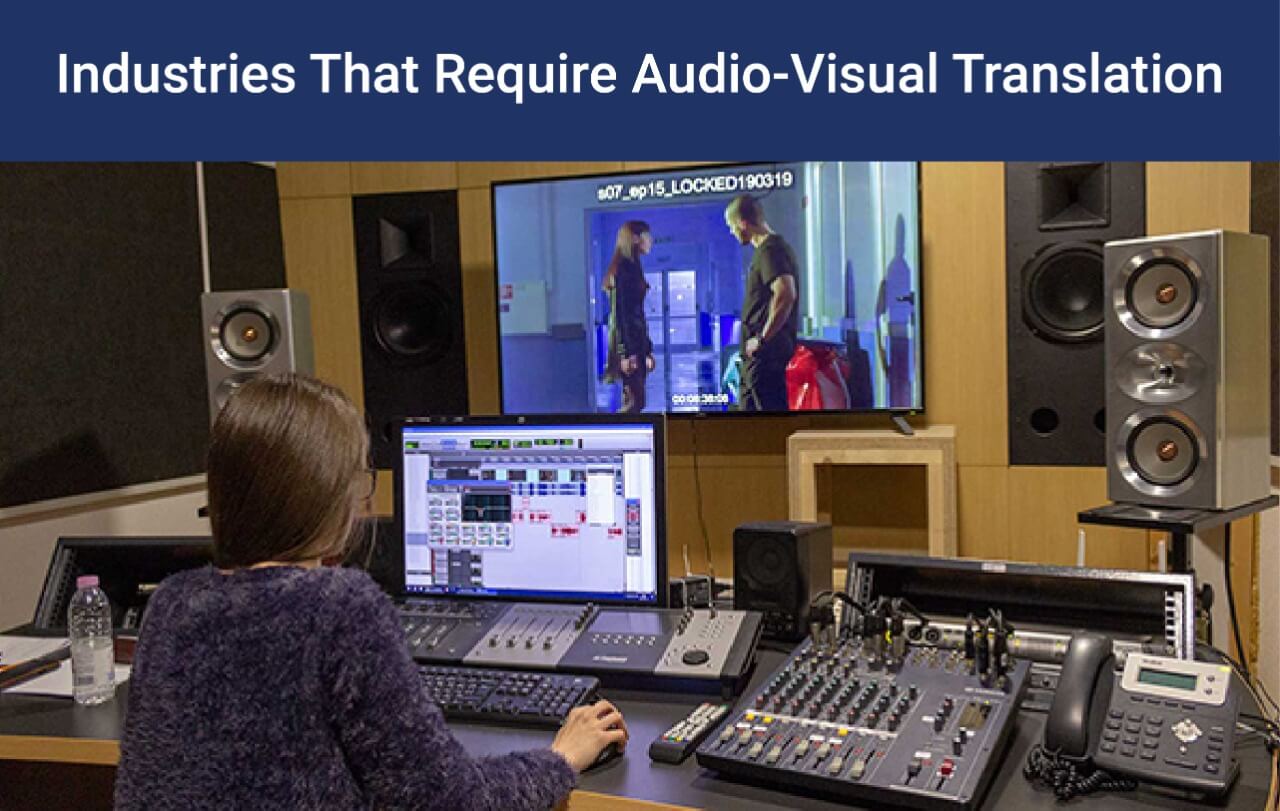
Audio-visual translation (AVT) describes the transfer of information from one language to another through audiovisual media. Given that audio and visual material is often consumed simultaneously, AVT is different from a simple print translation.
For example, when a film is ‘dubbed’, the soundtrack, visuals, and background noises largely remain the same. The only difference is in translating spoken content to another language, which is then visually adapted to gestures and lip movements.
Why is Audio-Visual Translation a Necessity?
Creating audio and video content is one of the best ways to reach your target audience. AVT is an essential contributor towards promotion strategies that are crisp, precise, and enable audience comprehension.
Audio-visual translation is an excellent option for the following reasons:
1. Helps Boost Search Engine Optimization
Research reveals that adding subtitles and transcripts to video content is a great way to boost the SEO ranking of video. This is primarily because the search engines register the text material that is a part of video.
2. Accessibility to Different Kinds of Resources
With the right translation services, it becomes easier to provide your audience with access to different kinds of audio and visual material. Choosing the most comfortable resource can significantly enhance customer experience.
3. Easy Comprehension
Translation of audio content to a visual format is a great way to increase rate of comprehension among the audience. This is especially true for industries described in the next section.
Which Industries Require Audio-Visual Translation?
Several industries, employ Audio-visual translation services
- Entertainment Industry - video content, audio content, narration for films, etc.
- Marketing & Advertising Industry - translation of web page AV content and advertisements to local languages.
- Corporate Sector - translation of company profile presentations for board & client meetings.
- VFX & Animation Industry - musicals, audio & video content, television programs, feature films, etc.
- Education Industry - Recorded speeches from seminars and conferences, translation of course content, etc.
The two most popular kinds of audio-visual translation are:
- Subtitling
- Dubbing
These services are employed across the different industries mentioned above to translate audio-visual media into a preferred language accurately.
The Challenge with Audio-Visual Translation
One of the critical challenges faced by industries employing AVT services is conveying cultural norms and tradition.
For example, visual content on the screen automatically helps you understand the associated cultural norms in the entertainment industry.
This is often conveyed through facial expressions, gestures, interior decoration, and even clothes! With audio-visual translation, on the other hand, a foreign audience can hear or read content in their language. However, there is a mismatch between the original visual elements of the content and the translation language.
The Importance of Localization Across Different Industries
Localization is a key factor that ensures audio-visual translation is done as correctly and precisely as possible. Localizing means modifying an audio-visual element for a target audience by considering any local cultural factors.
For example, the translation of different words and proverbscan raise difficulties. They are primarily culture-specific and may even be directly related to a previous concept. Linguistic meaning can also vary with social and historical lenses.
In these cases, linguistic and cultural knowledge of the source language is crucial to achieving the best solution in a target language.
At Language Services Bureau, we are specialized in the different aspects of audio-visual translation service. Our dedicated professionals have several years of experience to provide a cost-effective and high-quality translation!
Click here to learn more about our services!